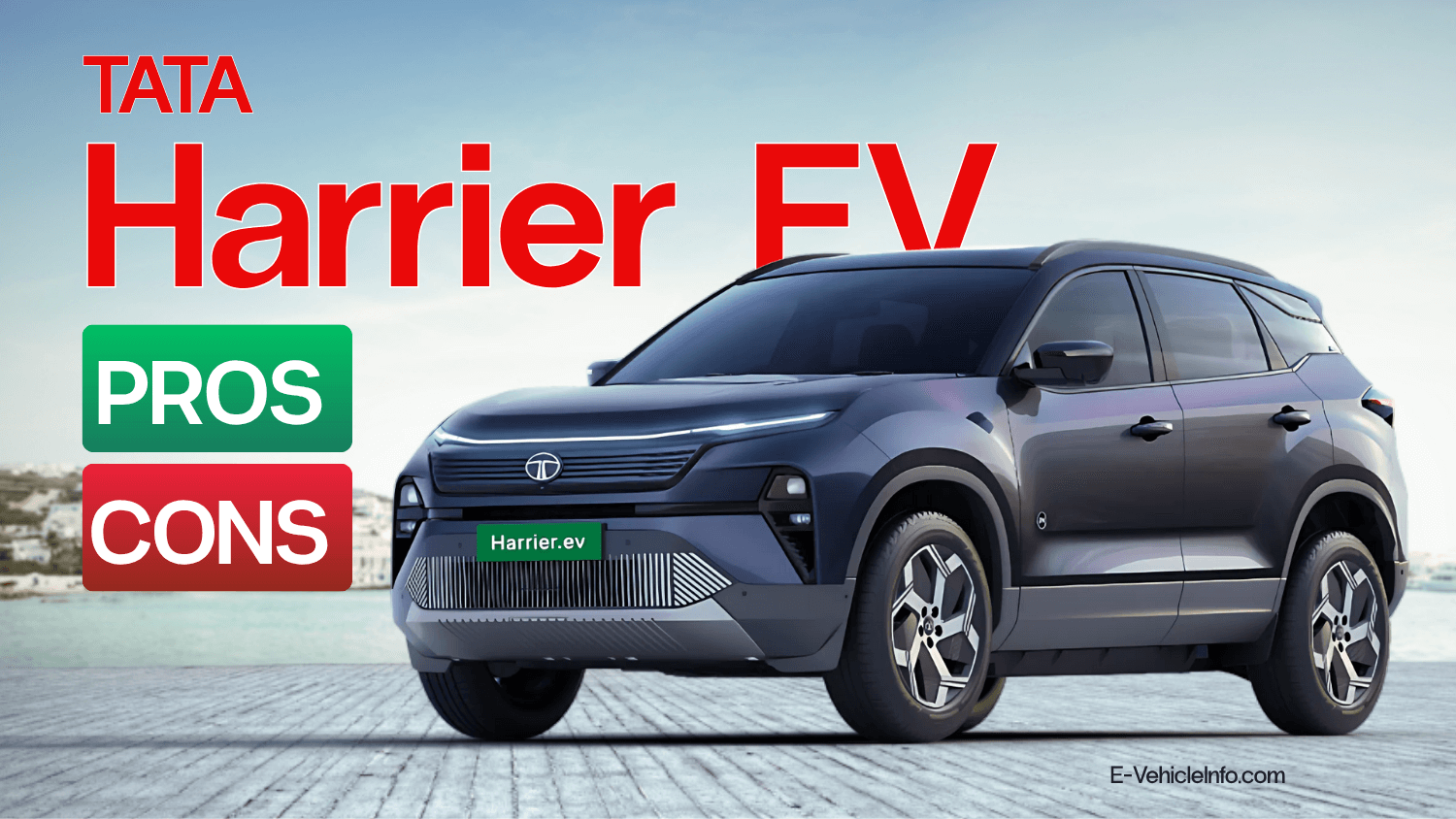
Gagan Choudhary, one of India’s trusted automotive content creators with over 1.89 million YouTube subscribers, recently shared his in-depth experience with the Tata Harrier EV.
Filmed during a full-day drive across the National Capital Region (NCR), the video focuses on the top-of-the-line QWD (Quad Wheel Drive) variant.
Here’s a complete breakdown of the Harrier EV’s specifications, real-world performance, features, pros and cons, and who it’s best suited for.
Specifications: Tata Harrier EV QWD

Powertrain and Performance
-
Dual Motor Setup: 158 hp front motor + 238 hp rear motor
-
Total Output: 396 bhp
-
Peak Torque: 504 Nm
-
0-100 km/h (claimed): 6.3 seconds
-
Top Speed: 180 km/h
-
Drive Modes: Eco, City, Sport, and Boost
Battery and Range
-
Battery: 75 kWh LFP (Lithium Iron Phosphate)
-
ARAI Range: 622 km
-
C75 Real-World Estimate (Tata): 460–490 km
-
Charging Time: 20–80% in 25 minutes with a 120 kW DC fast charger
Tata Harrier EV Real-World Range Test
City Range
-
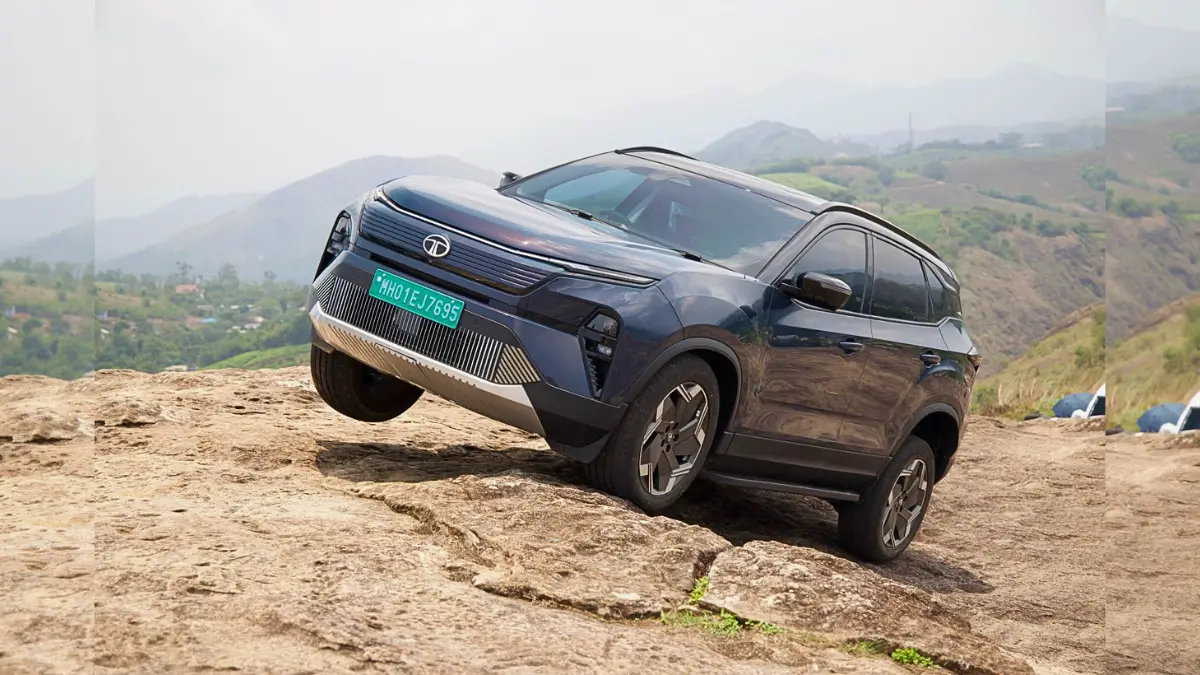
Observed Range: ~414–436 km in mixed conditions
-
Efficiency: 5.81 km/kWh (during highway-biased driving)
-
Expected City Range: 400–450 km in everyday use
Highway Performance
-
Cruising Stability: High-speed performance remains stable
-
Aerodynamic Efficiency: Helps maintain range
-
Power Delivery: Smooth and consistent across all modes
Tata Harrier EV (QWD) – Pros and Cons
Pros
1. Performance & Driving Experience
-
Impressive acceleration: 0-100 km/h in 6.3 seconds — matches performance SUVs in higher segments.
-
Smooth power delivery: The dual-motor AWD setup ensures balanced torque distribution, providing confident launches.
-
Ride quality: Independent suspension with Frequency-Selective Dampers (FSD) offers excellent bump absorption.
-
Handling: Despite its size, the SUV feels composed at high speeds and shows minimal understeer during spirited driving.
2. Real-World Usability
-
True 400+ km range: Real-world range of 414–436 km observed — enough for intercity drives or 3–4 days of urban use.
-
Fast charging capability: 20–80% in just 25 minutes via 120 kW DC fast charging — practical for long journeys.
-
Efficient in city and highway: Achieves ~5.8 km/kWh on highways, thanks to aerodynamic efficiency and regenerative braking.
3. Feature-Rich Cabin
-
Advanced driver tech: Level 2 ADAS, 540-degree camera, digital key, remote park assist with summon mode.
-
V2L & V2V: Vehicle-to-Load and Vehicle-to-Vehicle features add functionality, especially for power backup or roadside charging.
-
Premium interiors: Well-appointed cabin with quality materials and improved finish over the ICE Harrier. You can read our guide here: Tata Harrier EV vs Tata Harrier Diesel: Which One Should You Buy?
4. Design and Build
-
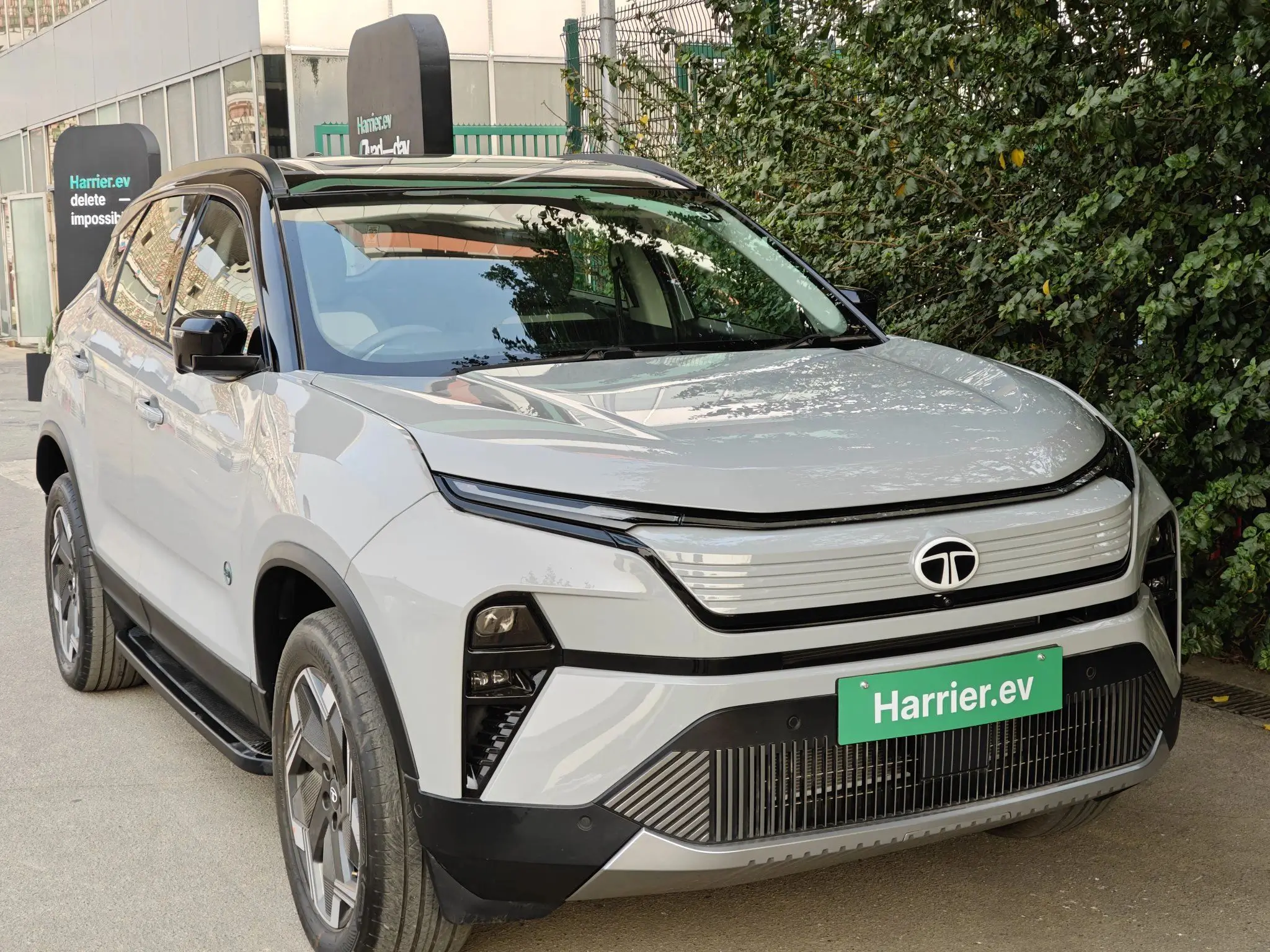
Solid road presence: Retains the bold Harrier silhouette with EV-specific design enhancements.
-
Frunk space: 67L in RWD, 35L in AWD — adds utility missing in many EVs in this range.
-
All-wheel drive: Rare in its segment, offering true versatility for challenging terrain or poor weather conditions.
Cons
1. Technical Shortcomings
-
Spongy brakes: Several reviewers, including Choudhary, noted a lack of brake bite and feedback.
-
Software glitches: Touchscreen lag and occasional system hiccups have been observed — these issues are likely to be addressed in future OTA updates.
-
Body roll: Due to SUV height and weight, mild roll is felt during hard cornering — not a deal-breaker, but noticeable.
2. Practical Limitations
-
Service ecosystem: EV-specific servicing and troubleshooting infrastructure is still catching up, especially in smaller cities.
-
Unproven long-term reliability: As with most new EVs, concerns remain around the longevity of high-end electronics and sensors.
-
Premium pricing: Top-end variants nearing ₹30 lakh put it in competition with better-established ICE SUVs and some luxury EVs.
Price and Variants
| Variant | Battery | Power | Range | Ex-showroom Price |
|---|---|---|---|---|
| Adventure 65 (Base) | 65 kWh | 235 bhp | 538 km | ₹21.49 lakh |
| Empowered QWD 75 (Top) | 75 kWh | 390 bhp | 622 km | ₹28.99 lakh |
| Empowered QWD 75 Stealth | 75 kWh | 390 bhp | 622 km | ₹29.74 lakh |
Tata Harrier EV Competition
The Tata Harrier EV enters a fast-growing mid-size electric SUV segment. Key competitors include:
-
Mahindra XEV 9e – a direct rival with similar specifications
-
BYD Atto 3 – an established international EV player
-
Hyundai Creta Electric – an upcoming mainstream alternative
What Sets Harrier EV Apart:
-
The only AWD option in this price segment
-
Builds on the success and familiarity of the ICE Harrier
-
Aggressive pricing relative to the tech and performance it offers
Final Verdict: Who Should Buy the Tata Harrier EV?
Gagan Choudhary’s review presents the Tata Harrier EV QWD as a well-rounded electric SUV that blends performance, practicality, and cutting-edge features. It’s not just an electrified version of the ICE Harrier—it’s a thoroughly re-engineered EV tailored for Indian buyers.
Ideal For:
-
Buyers seeking AWD capability in an EV
-
Enthusiasts who want performance and tech-rich features
-
Long-distance drivers needing 400+ km real-world range
-
Tata loyalists transitioning to electric mobility
Consider If:
-
You’re comfortable being an early adopter with occasional software updates
-
You’re aware that service support for EV tech may still be expanding
-
You’re okay with premium pricing for top-end variants
Final Thoughts
With its blend of speed, range, tech, and design, the Tata Harrier EV is a serious contender in India’s electric SUV space.
Gagan’s detailed, real-world review provides valuable insights for anyone considering this feature-packed EV for their next powerful electric SUV.
Disclaimer:
This article is based on information shared by Gagan Choudhary on his official YouTube channel and has been reviewed and verified by the editorial team at e-vehicleinfo.com. All specifications and insights reflect the details available at the time of publication.