Ather Energy built its reputation around scooters such as the 450 series, where performance, software and connected technology were as important as the electric powertrain itself. But the next stage of the company’s journey is less about being the fastest electric scooter and more about becoming a practical choice for everyday Indian households.
That is where the Ather Konarc comes in.
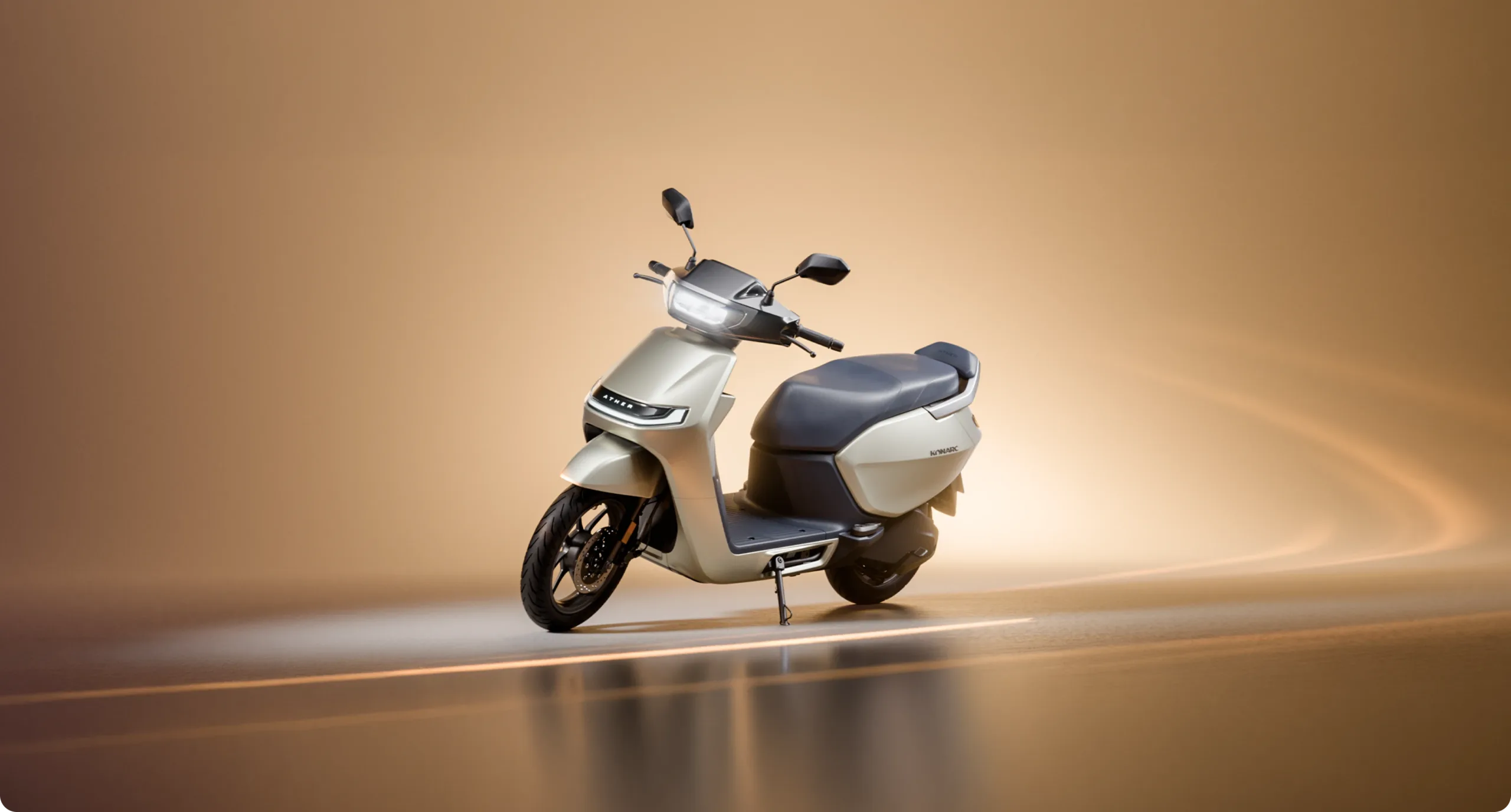
Priced at an introductory ₹99,999, the Konarc is Ather’s latest attempt to move deeper into the mass-market electric scooter segment. It is built on the company’s new EL platform, uses a metal body and steel unibody chassis, and offers multiple battery configurations with an IDC range extending up to 200 km, depending on the version. Ather Energy
But the Konarc is more than just another scooter added to Ather’s portfolio. It represents an important change in strategy.
Ather Konarc: Built for Everyday Indian Riding
Ather’s earlier products were closely associated with sporty styling, acceleration and technology. The Konarc takes a different approach.
The company describes it as being designed for “the everyday, and everything it brings.” Its hardware reflects that philosophy, with 14-inch alloy wheels, long-travel suspension, a metal body and steel unibody chassis. Ather has also introduced a silent gear drive and electronic braking technology on the scooter. Ather Energy
That combination matters because the Indian family scooter has a very different job from a performance-oriented electric scooter.
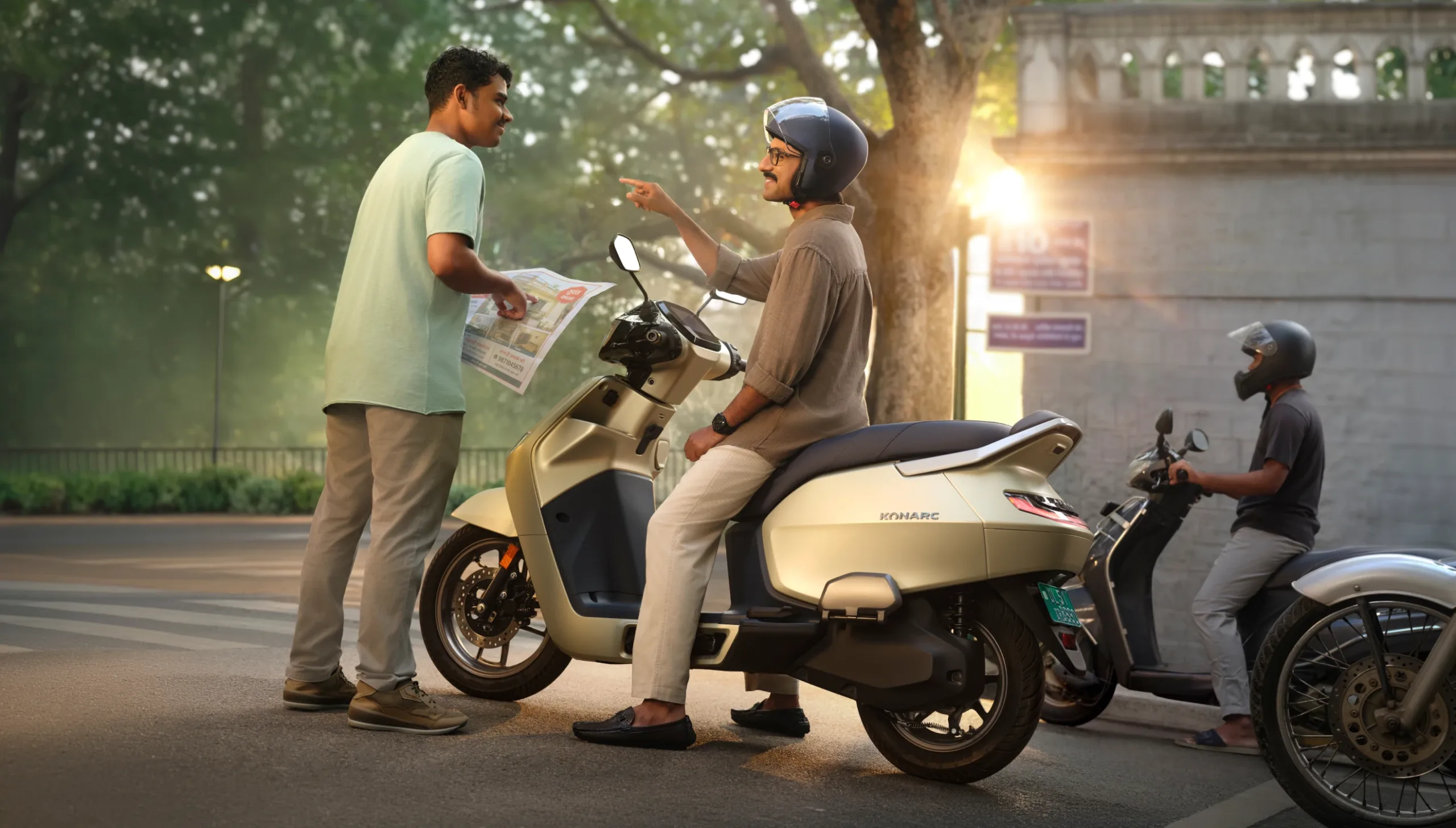
It may have to deal with broken roads in the morning, school runs, office commutes, grocery shopping and occasional longer trips. For such customers, outright acceleration is usually not the first priority.
Ride comfort, durability, storage, charging convenience and reliability matter more.
The Konarc appears to have been designed around that reality.
The ₹99,999 Starting Price Is One of Its Biggest Talking Points
The most aggressive part of the Konarc’s positioning is its introductory price.
Ather currently lists the Konarc S starting at ₹99,999, while the higher Konarc Z is listed as “coming soon.” The S version can be configured with 100 km, 125 km, 161 km and 200 km IDC range options, while the Z is listed with 125 km and 161 km options. Ather Energy
The starting price, therefore, does not mean every Konarc will deliver the headline 200-km IDC figure.
This is an important distinction for buyers.
The scooter is essentially being offered as a configurable product rather than a single specification. Customers can choose a battery/range configuration according to their usage and budget.
For an urban commuter travelling relatively short distances every day, the smaller configuration could make more sense. Someone regularly travelling longer distances may have a stronger reason to consider the larger battery option.
Up to 200 km IDC Range
Range is obviously one of the first questions any electric scooter buyer asks.
Ather advertises the Konarc with up to 200 km IDC range, although the actual figure depends on the selected configuration. The official configurator currently lists four IDC range options for the Konarc S: 100 km, 125 km, 161 km and 200 km. Ather Energy
As always, IDC range should not be confused with real-world riding range.
Actual range can vary substantially depending on speed, traffic, rider weight, riding mode, road conditions, temperature and use of electrical systems.
For a family scooter, however, offering several battery choices is an interesting approach. It gives Ather room to target both price-sensitive commuters and buyers who are willing to pay more for additional range.
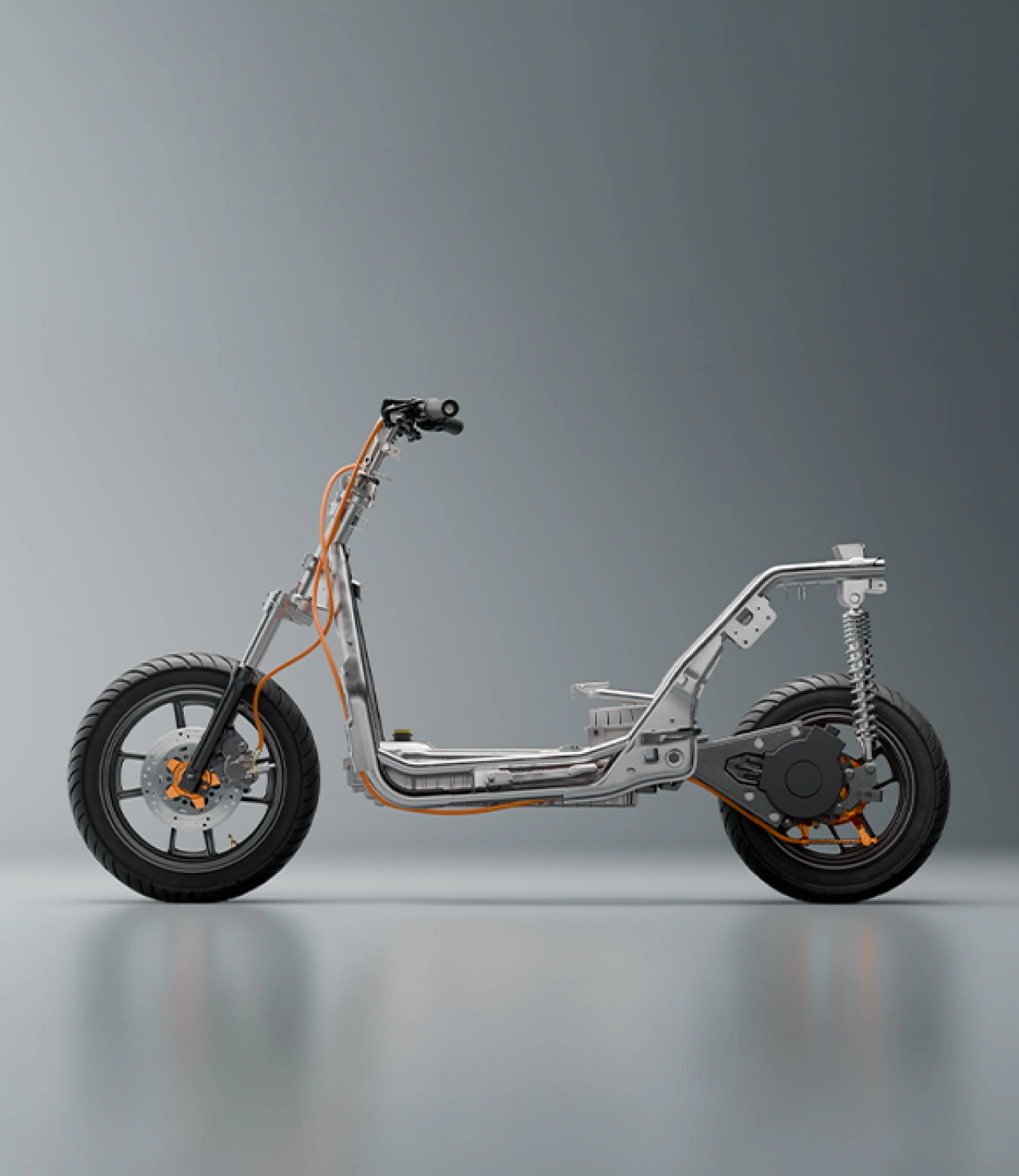
Metal Body and Steel Unibody: A Deliberate Choice
One of the more interesting decisions with the Konarc is its construction.
Ather has given the scooter a metal body with a steel unibody chassis. Ather Energy
This is notable in a segment where lightweight plastic-bodied scooters are common.
Ather is clearly putting emphasis on a sense of solidity and durability. Whether that translates into a meaningful long-term advantage will ultimately depend on ownership experience, repairability and how the scooter performs over years of Indian road conditions.
But the engineering direction is clear: Konarc is not being positioned simply as a low-cost electric scooter.
It is intended to feel substantial.
14-Inch Wheels and Long-Travel Suspension
The Konarc gets 14-inch alloy wheels and long-travel suspension, features that should be particularly relevant for Indian roads. Ather Energy
Large wheels can help provide greater stability and confidence over uneven surfaces, while longer suspension travel can improve comfort on broken roads.
These are not headline-grabbing features like acceleration figures or futuristic displays, but they are exactly the kind of hardware choices that can influence everyday ownership.
For a family scooter, that may be more important.
Ather Is Bringing Its Software Philosophy to a More Affordable Scooter
Ather has historically differentiated itself through software and connected technology.
The Konarc continues that approach.
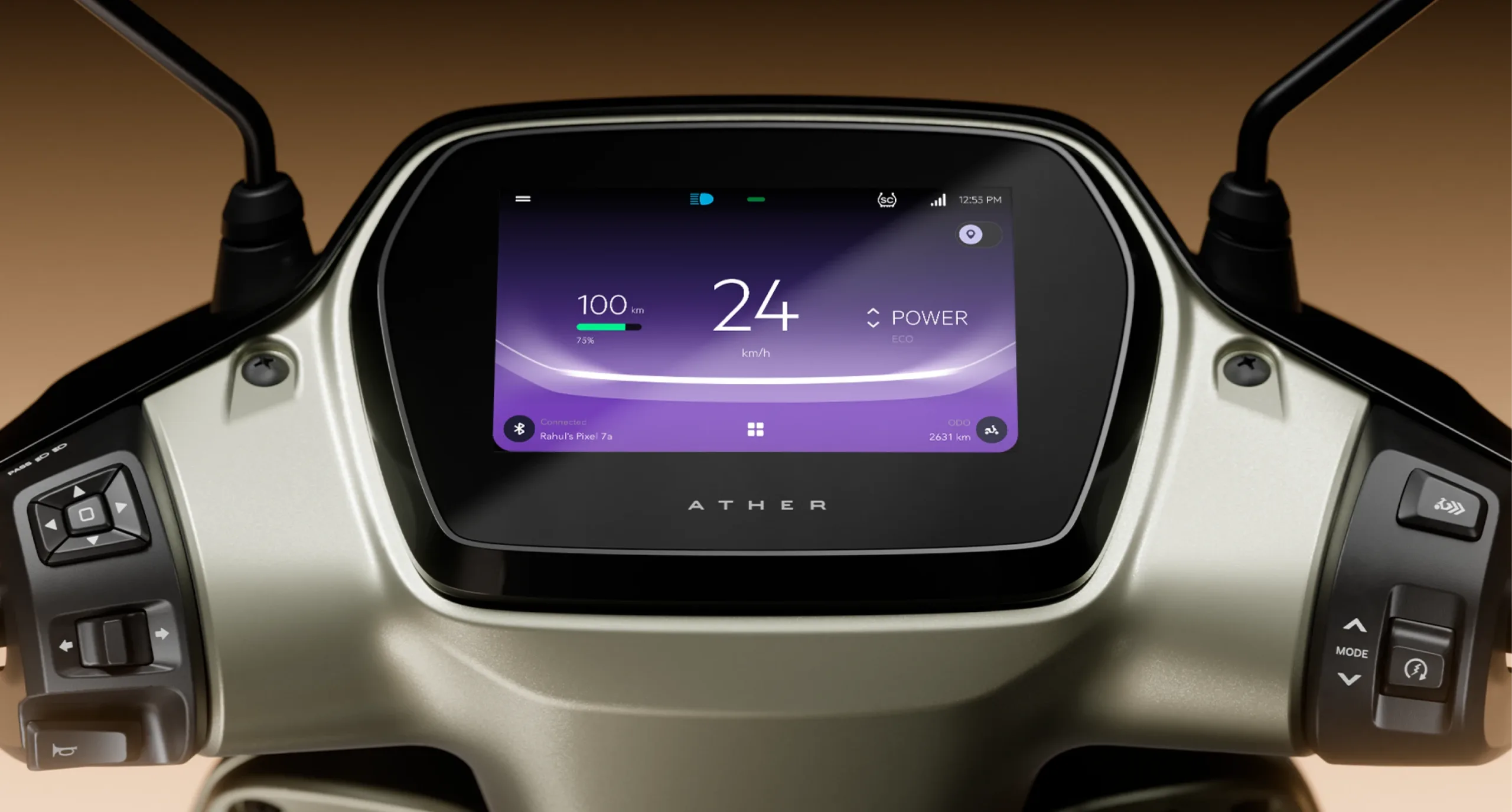
Depending on the configuration, the scooter can offer features including Google Maps integration, AutoHold, theft and tow alerts, OTA updates, remote charging status and Ather app connectivity. Ather Energy
Higher versions add more connected functionality, while the base configuration is intentionally simpler.
That is another sign of Ather trying to create a product ladder rather than putting every feature into every scooter.
The company can therefore offer a lower entry price while giving customers the option of upgrading to more technology.
The Dashboard Is Also Different Across Variants
Ather lists the Konarc S with its DeepView display, while the Konarc Z is planned with a TFT touchscreen. Ather Energy
The higher version also gets features such as MagicKey and Advanced Electronic Braking System, according to Ather’s current product information. Ather Energy
This again shows how Ather is segmenting the product.
Instead of creating one expensive specification, it is using different combinations of hardware and software to reach different price points.
That could become important as Ather tries to increase volumes.
Charging: Ather Wants to Remove One of the Biggest EV Concerns
Charging remains one of the biggest questions around electric two-wheelers.
The Konarc supports home charging, while Ather also promotes access to its fast-charging ecosystem. The company says customers can charge at home or use Ather Grid for faster top-ups. Ather Energy
Ather’s charging network has been an important part of the company’s strategy from the beginning.
By March 2026, Ather said its charging ecosystem had grown to more than 6,000 charging points powered by LECCS, which it described as India’s largest fast-charging network for two-wheelers. Ather Energy
For Konarc customers, this ecosystem can become a meaningful advantage, particularly as Ather continues expanding beyond its traditional strongholds.
Charging at Home Can Also Be Faster
Ather’s Konarc FAQ says the scooter supports combined charging, allowing the onboard charger and an external offboard charger to be used together. According to the company, this can reduce home charging time by up to half. Ather Energy
The main Konarc page advertises up to two hours of super-fast home charging, although charging time will naturally depend on the battery configuration and charging setup. Ather Energy
For a family scooter, charging convenience can be just as important as battery capacity.
An EV that can be conveniently charged overnight already fits many urban routines. Faster charging becomes useful when the scooter has to be used multiple times during the day.
Battery Warranty: Buyers Need to Read the Fine Print
Ather’s Konarc marketing highlights a 10-year battery warranty, but the detailed warranty structure is more nuanced.
According to Ather’s FAQ, the standard battery warranty is 3 years or 30,000 km, while AtherStack Pro includes an upgrade to 5 years or 60,000 km. Customers can then purchase extended coverage options reaching 8 years/80,000 km or 10 years/1,00,000 km. Ather Energy
That distinction is important.
The headline “10-year battery warranty” should not be interpreted as every Konarc automatically receiving ten years of coverage at the starting price.
Potential buyers should check exactly which warranty package applies to the variant and configuration they purchase.
Ather’s New EL Platform Is Perhaps More Important Than the Konarc Itself
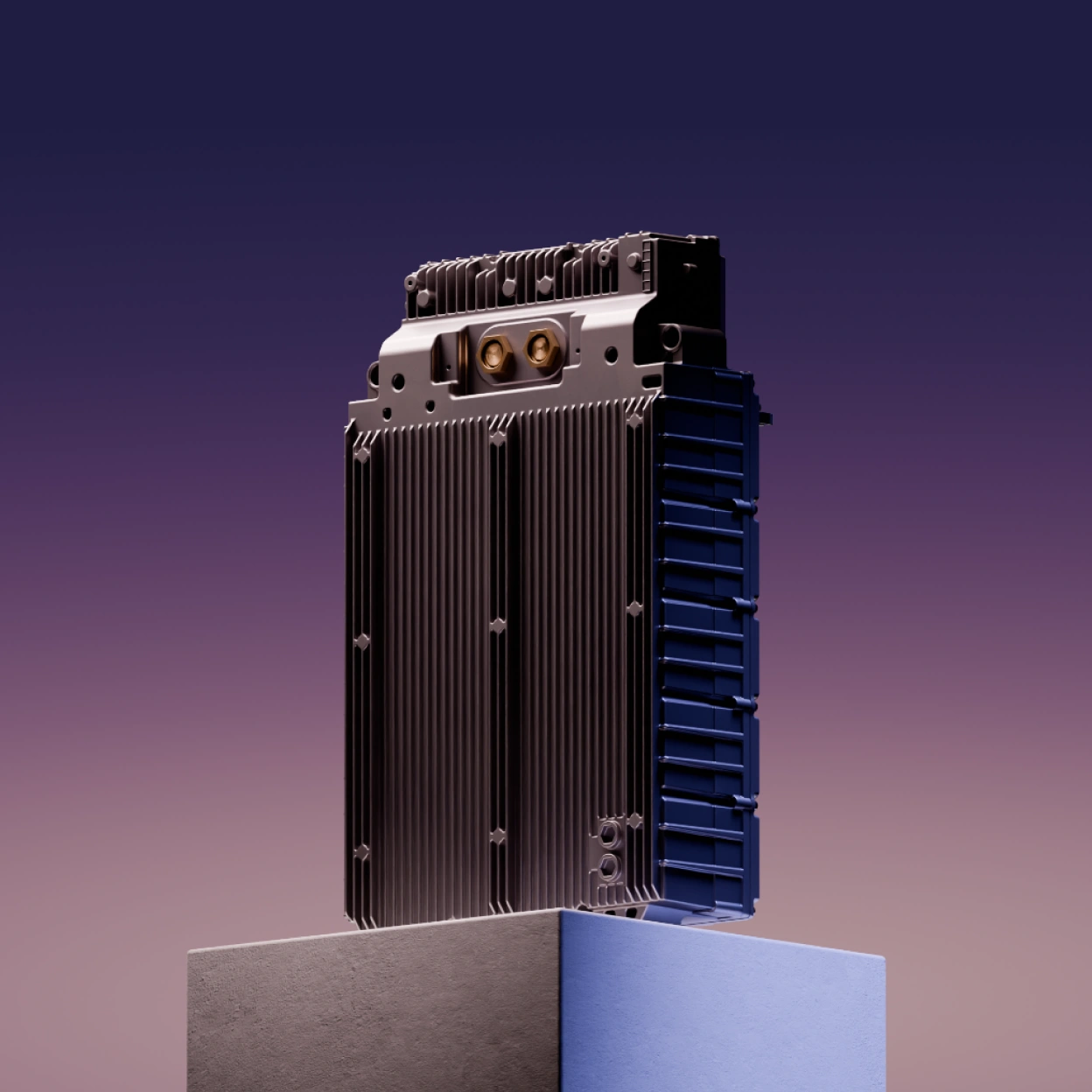
Behind the Konarc sits Ather’s new EL platform.
Ather unveiled EL in 2025 as its next-generation scooter architecture, designed to support multiple vehicle types while improving scalability and cost efficiency. The company says the platform was developed using 26 lakh kilometres of field data and has a redesigned chassis, powertrain and electronics architecture. Ather Energy
That makes the Konarc strategically important.
Ather doesn’t just need a successful scooter. It needs an architecture that can support multiple products without making every new model prohibitively expensive to develop and manufacture.
The EL platform is intended to do exactly that.
Ather says its simpler architecture and reduced component count can enable 15% faster assembly, while service intervals can extend to 10,000 km. Ather Energy
If those improvements translate into actual manufacturing and ownership benefits at scale, EL could become one of the most important developments in Ather’s next phase.
Why Ather Needed a Scooter Like the Konarc
There is a bigger story behind the Konarc.
For years, Ather’s identity was heavily associated with the 450 family. The scooters developed a strong reputation among technology-conscious and performance-oriented EV buyers.
But that market alone is not large enough to build the scale Ather is now targeting.
The company got a major lesson from the Rizta.
Introduced in 2024 as Ather’s first family scooter, Rizta opened the brand to customers who were looking for comfort, practicality and family usability rather than simply performance. Ather Energy
The result has been significant.
Ather reported that Rizta crossed 300,000 cumulative sales in May 2026, and accounted for approximately 76% of Ather’s FY26 sales volume. Ather Energy
That tells us something important about the Indian EV market.
The next stage of electric two-wheeler growth is not necessarily going to come from enthusiasts.
It will come from ordinary households.
And the Konarc is designed to go after that much larger market.
Konarc vs Rizta: They Are Not Exactly the Same Product
It would be easy to look at the Konarc and Rizta and assume they are competing for exactly the same buyer.
They are not.
The Rizta is explicitly positioned by Ather as its family scooter, with features such as a large seat and 56 litres of total storage. Ather Energy
The Konarc takes a somewhat different approach.
Its messaging revolves around being a dependable everyday scooter, with a focus on durability, ride comfort, simplicity and affordability.
In other words:
Rizta is about family practicality.
Konarc is about making Ather’s engineering and ecosystem accessible to a broader everyday commuter.
There is some overlap, but the products can occupy different spaces within Ather’s expanding portfolio.
The Real Test Will Be Ownership, Not the Specification Sheet
The Konarc looks strategically important on paper.
But the Indian electric scooter market has become highly competitive.
Ather now has to compete not just on design and technology, but also on price, financing, service reach, spare parts, reliability and long-term battery performance.
This is where the Konarc will ultimately be judged.
The ₹99,999 starting price is attractive, but customers will compare the on-road price of the exact configuration with alternatives before making a decision.
Similarly, a claimed 200 km IDC range looks impressive, but buyers will care more about how far the scooter actually travels during their daily commute.
And a metal body sounds reassuring, but long-term durability and maintenance costs will determine whether that advantage matters.
These are questions that only sustained customer experience can answer.
Ather’s Bigger Bet
Ather entered the Indian EV market with a relatively narrow idea: build a genuinely good electric scooter and rethink the entire ownership experience around it.
More than a decade later, that idea has evolved.
The company now has multiple product families, a charging ecosystem, a large retail and service network, proprietary software, its own vehicle platforms and a much wider customer base.
In FY26, Ather reported 262,942 vehicle sales, 700 Experience Centres and approximately 548 service centres. The company also reported ₹3,823 crore in total income for the year. Ather Energy
The Konarc is therefore arriving at a very different Ather than the one that launched the original 450.
The company is no longer trying only to convince early EV enthusiasts.
It is trying to convince the mainstream Indian scooter buyer.
Ather Konarc Specifications at a Glance
| Feature | Ather Konarc |
|---|---|
| Starting price | ₹99,999 introductory price |
| Range options | 100 km / 125 km / 161 km / 200 km IDC |
| Top speed | Up to 70 km/h for Konarc S |
| Wheels | 14-inch alloy |
| Body | Metal body |
| Chassis | Steel unibody |
| Suspension | Long-travel suspension |
| Drive | Silent Gear Drive |
| Dashboard | DeepView; TFT touchscreen on higher version |
| Charging | Home charging + Ather Grid access |
| Battery warranty | Standard 3 years/30,000 km; extended options available |
| Service interval | Up to 10,000 km depending on configuration/package |
| Key technology | Google Maps, AutoHold, tow/theft alerts, OTA updates on supported versions |
Specifications and pricing are based on Ather’s current official product information and can vary by variant/configuration. Ather Energy
Our Take
The Ather Konarc is important not because it is the most powerful scooter Ather has ever built, but because it represents where the company is going next.
The 450 established Ather’s engineering identity.
The Rizta showed that Ather could build for Indian families and generate much larger volumes.
The Konarc takes the next step: bring Ather’s technology, charging ecosystem and engineering approach into a more accessible price band.
The biggest question is whether Ather can maintain the product quality and ownership experience that built its reputation while simultaneously chasing much higher volumes.
If it can, the Konarc could become far more important to Ather’s future than its ₹99,999 starting price suggests.
For Electric Vehicle Info, the Konarc is not simply another electric scooter launch. It is a test of whether one of India’s most engineering-focused EV companies can finally scale into the mass market.