Electric vehicles are rapidly growing in popularity in India, with more and more buyers looking for eco-friendly options without compromising on power or comfort.
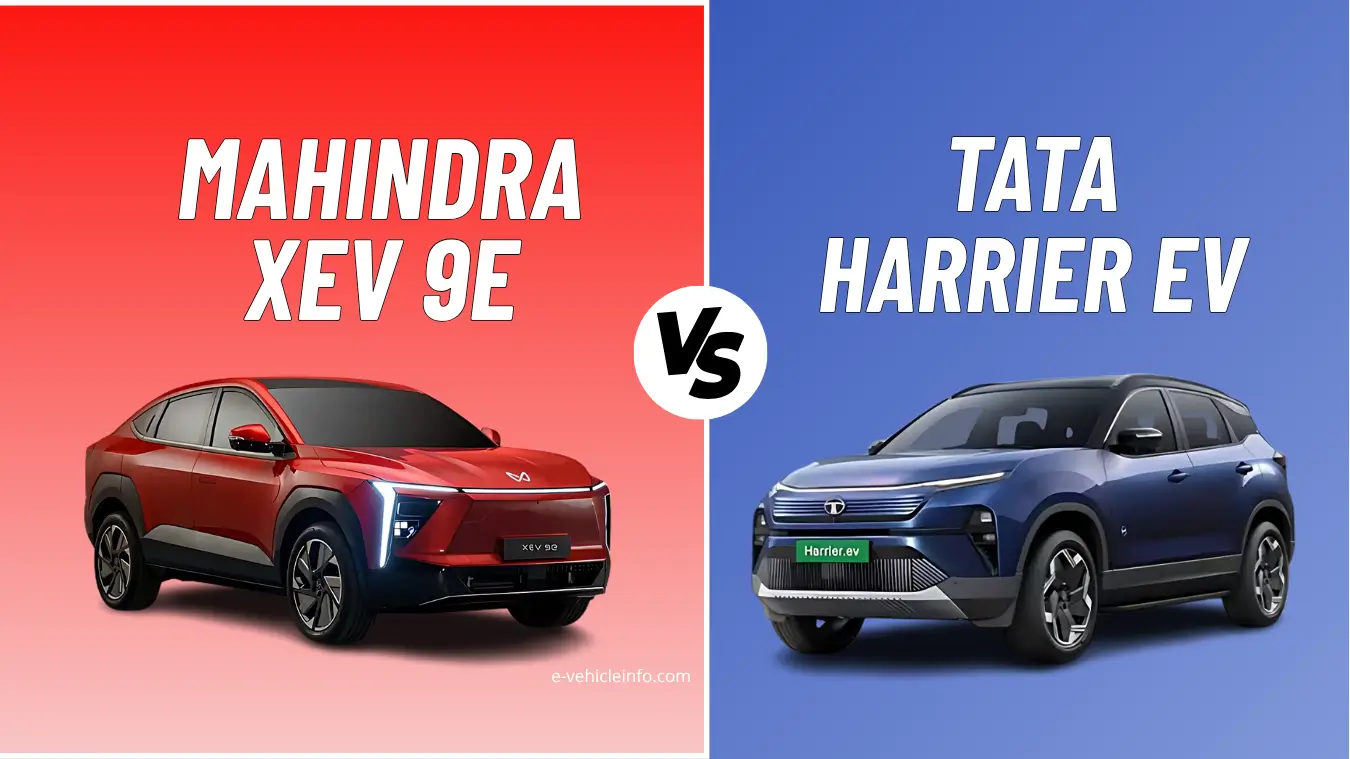
Two very strong names that have been launched in India recently have been in the news – Mahindra XEV 9e and Tata Harrier EV.
Both EVs look very futuristic, have a lot of features and are built for Indian roads, but they cater to slightly different tastes and needs.
In this article, we take a closer look at the performance, design, technology or price of each SUV – so that you can decide which SUV is better for your lifestyle in this exciting EV era.
Mahindra XEV 9e vs. Tata Harrier EV – Full Comparison
| Feature | Mahindra XEV 9e | Tata Harrier EV |
|---|---|---|
| Starting Price (Ex-showroom) | ₹21.90 lakh | ₹21.49 lakh |
| Top Variant Price | ₹30.50 lakh (approx.) | ~₹27–28 lakh (estimated) |
| Battery Capacity | 59 kWh / 79 kWh | 65 kWh / 75 kWh |
| Range (Claimed) | Up to 656 km (MIDC) | Up to 627 km (MIDC), 480–505 km real-world |
| Charging Time (Fast Charge) | 20–80% in ~20 mins (180 kW DC) | 250 km range in 15 mins (1.5C charging) |
| Power Output | Up to 286 PS | 396 PS (Dual Motor: 158 PS front + 238 PS rear) |
| Torque | ~345 Nm | 504 Nm |
| 0–100 km/h Acceleration | ~6.8 seconds | 6.3 seconds |
| Drivetrain | RWD / AWD (variant dependent) | RWD & QWD (Dual Motor AWD) |
| Drive Modes | Multiple (Eco, City, Sport) | Eco, City, Sport, Boost (QWD) |
| Terrain Modes | Not specified | 6 modes incl. Sand, Mud, Rock, Snow |
| Infotainment Screen | Up to 43″ triple-screen dashboard | 14.53″ Harman QLED screen (world’s first) |
| Sound System | Premium (Harman Kardon) | JBL Black 10-speaker with Dolby Atmos |
| Autonomous Features | Smart cabin features | e-Valet, Auto Park Assist, Reverse Assist, Summon Mode |
| Camera & View | 360° surround camera | 540° Clear View Assist + Transparent Mode |
| ADAS (Safety Tech) | Yes, limited details | Level 2 ADAS – 20+ features |
| Airbags | Likely 6 | 7 airbags (including knee airbag) |
| Boot Space | ~663 litres | 502L (expandable to 999L) + 35L frunk |
| V2L / V2V (Power Sharing) | Not mentioned | Yes – power other devices or EVs |
| Sunroof | Panoramic | Voice-assisted panoramic sunroof |
1. Power & Performance
-
Tata Harrier EV
Dual-motor AWD (158 PS front + 238 PS rear) delivers 396 PS and a punch from 0–100 km/h in 6.3 s. -
Mahindra XEV 9e
RWD layout with either a 59 kWh (231 PS) or 79 kWh (286 PS) battery pack. The higher-spec does 0–100 km/h in about 6.8 s.
Verdict: Harrier EV holds the edge on outright acceleration and AWD traction.
2. Range & Charging
-
Harrier EV packs 65 kWh and 75 kWh options, with the 75 kWh AWD claiming 622 km (MIDC), real-world ~480–505 km; regenerates a claimed 250 km in just 15 min of DC charging.
-
XEV 9e offers 59 kWh and 79 kWh packs; the bigger one claims an impressive 656 km (MIDC).
Jack to wall charge: XEV 9e supports up to 180 kW DC (20–80% in ~20 min), Harrier caps at 120 kW (20–80% in ~25 min).
Verdict: On paper, XEV 9e wins the range game and faster charging; Harrier follows closely.
3. Dimensions & Practicality
-
XEV 9e is longer (4,789 mm vs. Harrier 4,607 mm), and offers a larger cabin volume with a 663 L boot.
-
Harrier EV is wider and taller—more stance and road presence—and claims superior ground clearance and wading ability.
Verdict: XEV 9e plays the spacious-classy card; Harrier goes rugged.
4. Design & Features
-
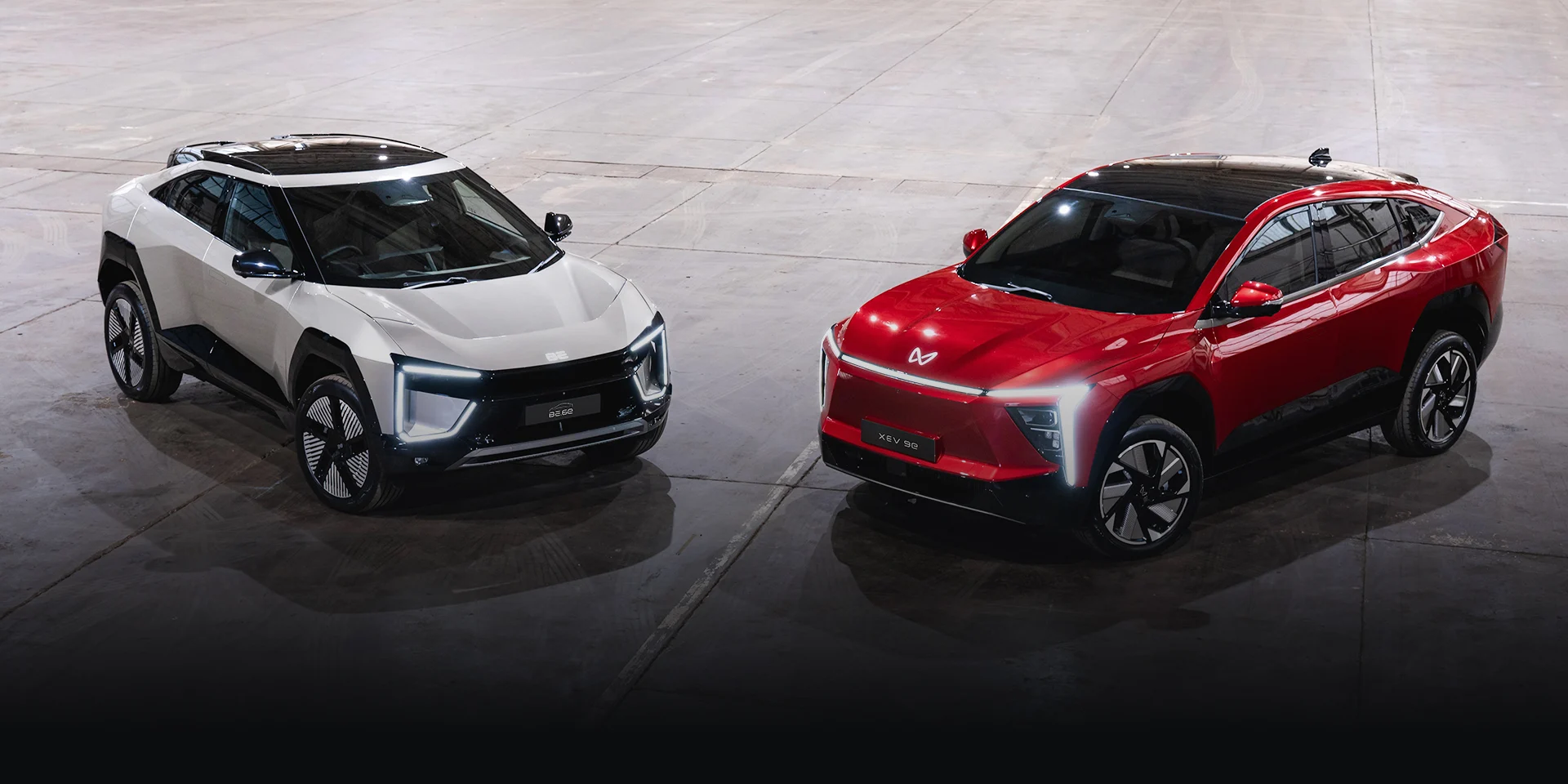
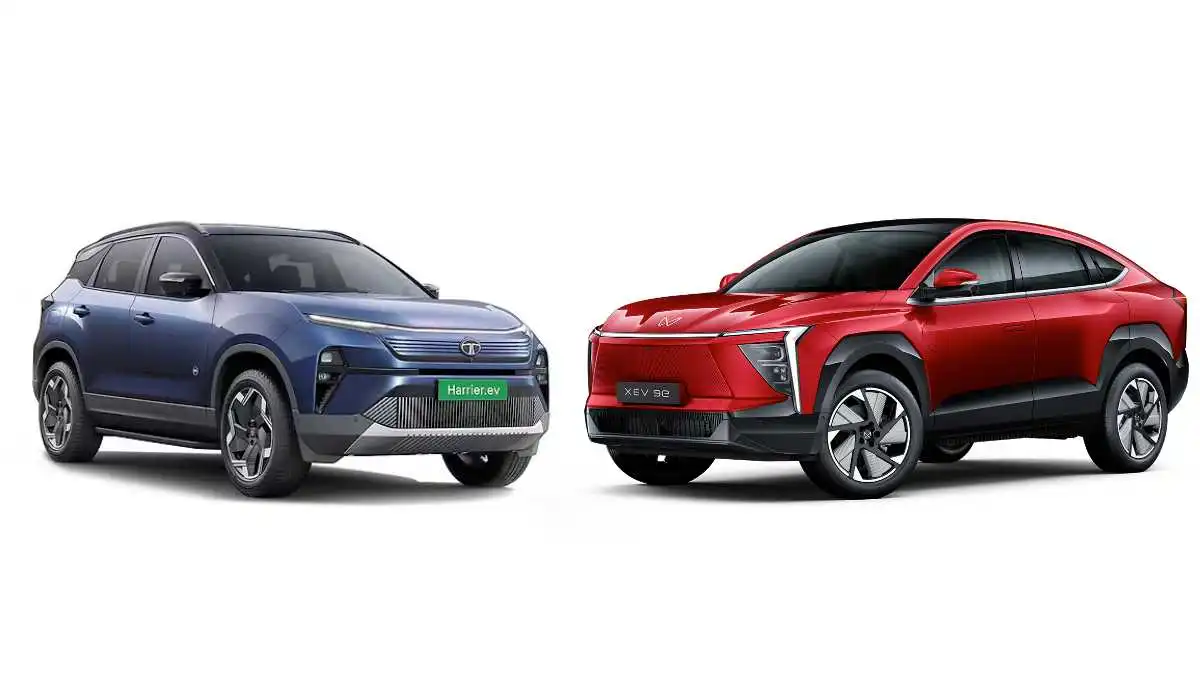
XEV 9e sports futuristic aesthetics: flush handles, full-width LED strip, glass panoramic roof, triple-screen setup (43″ dashboard), heads‑up display, Harmon Kardon 16-speaker audio, and a suite of connected ‘smart cabin’ apps. Read more about the Top 10 Hero-Features of Mahindra XEV 9e
-
Harrier EV blends muscular SUV styling with EV cues—blanked grille, aerodynamic wheels—and focuses on usability: panoramic sunroof, 14.3″ QLED touchscreen, 10-speaker system, 360° surround cameras with transparent under‑car view, e‑valet and park assist modes, plus 7 airbags and Level 2 ADAS. Read more about Tata Harrier EV 2025 and its Top 10 Most Advanced Features.
Verdict: The XEV 9e aims for luxury tech; the Harrier emphasises rugged practicality and off-road savviness.
5. Price & Variants
-
Harrier EV starts at ₹21.49 lakh (ex-showroom).
-
XEV 9e kicks off at ₹21.90 lakh and stretches up to ₹30.50 lakh for the 79 kWh variant.
Verdict: Harrier wins on entry price and AWD trim value, while XEV offers more range and features at higher trims.
Final Take
-
Choose Mahindra XEV 9e if you:
-
Want the longest EV range in the segment (656 km).
-
Crave tech-rich cabin—massive screen, audio system, HUD.
-
Value sleek, coupe‑SUV styling and premium feel.
-
-
Opt for Tata Harrier EV if you:
-
Seek performance and handling with AWD traction.
-
Need off-road prowess—better clearance & rugged build.
-
Prefer practical tech: transparent underbody view, e‑valet, park assist.
-
Appreciate upfront affordability and strong safety credentials.
-
The showdown between the Mahindra XEV 9e and Tata Harrier EV isn’t just about specs—it highlights different EV philosophies:
Pick the Tata Harrier EV if:
-
You want rugged performance, real-world range, and top-tier comfort and safety.
- You often travel on mixed terrain and appreciate intelligent features.
Choose the Mahindra XEV 9e if:
-
-
You care more about a longer range, fast charging, and a premium urban look.
-
You like having screen-heavy interiors and a sleek design.
-
Ultimately, both SUVs are excellent in their own right. The decision depends on your needs: adventure and tech fusion with the Harrier EV, or urban elegance and range mastery with the XEV 9e.